A Woman’s Tale of Desire
Surplus Calories of Desire: Sujin Lim’s Portrait of Poverty Amidst Plenty
A Woman’s Tale of Desire
There are many moments when human beings become weak. For some, it’s money; for others, it’s fame or love. From my childhood into adulthood, the figure of a "woman" has been positioned in my mind—whether overtly or through my own defined sense of aesthetics—as a being meant to satisfy visual perception.
I think of my old teacher who wished food came in a pill so she could feel full without having to diet. I think of my friends, relatives, and family members who have spent their entire lives battling with their weight. Regardless of age, gender, or wealth, everyone is obsessed with dieting. We are in a state of dietary anomie. We produce and consume garbage calories that we don't even need. Parasitic within us is desire, and rooted deep within that desire is the instinct we call appetite.
Caught in this food-chain-like symbiosis, I, too, live each day constantly surrendering to these circumstances. The more we obsess over beauty, the more we indulge our appetites. We see endless rows of bakeries, skyrocketing dessert prices, and the resulting cycles of anorexia, binge eating, and overconsumption. We see people running on treadmills until their bodies break, or jogging along the Han River under the trendy guise of being "runners"—even turning to medical inventions like Wegovy.
Surrounded by the irony of countless diet foods and health supplements, I realize I am just a weak human being unable to offer a fundamental solution. I am just another person lamenting without a clever answer, left feeling suffocated once again today. Caught in the hamster wheel of an ignorant society defined by a violent overabundance of nutrients, we live resigned and deceived. We consume, and then we excrete it all in the bathroom.
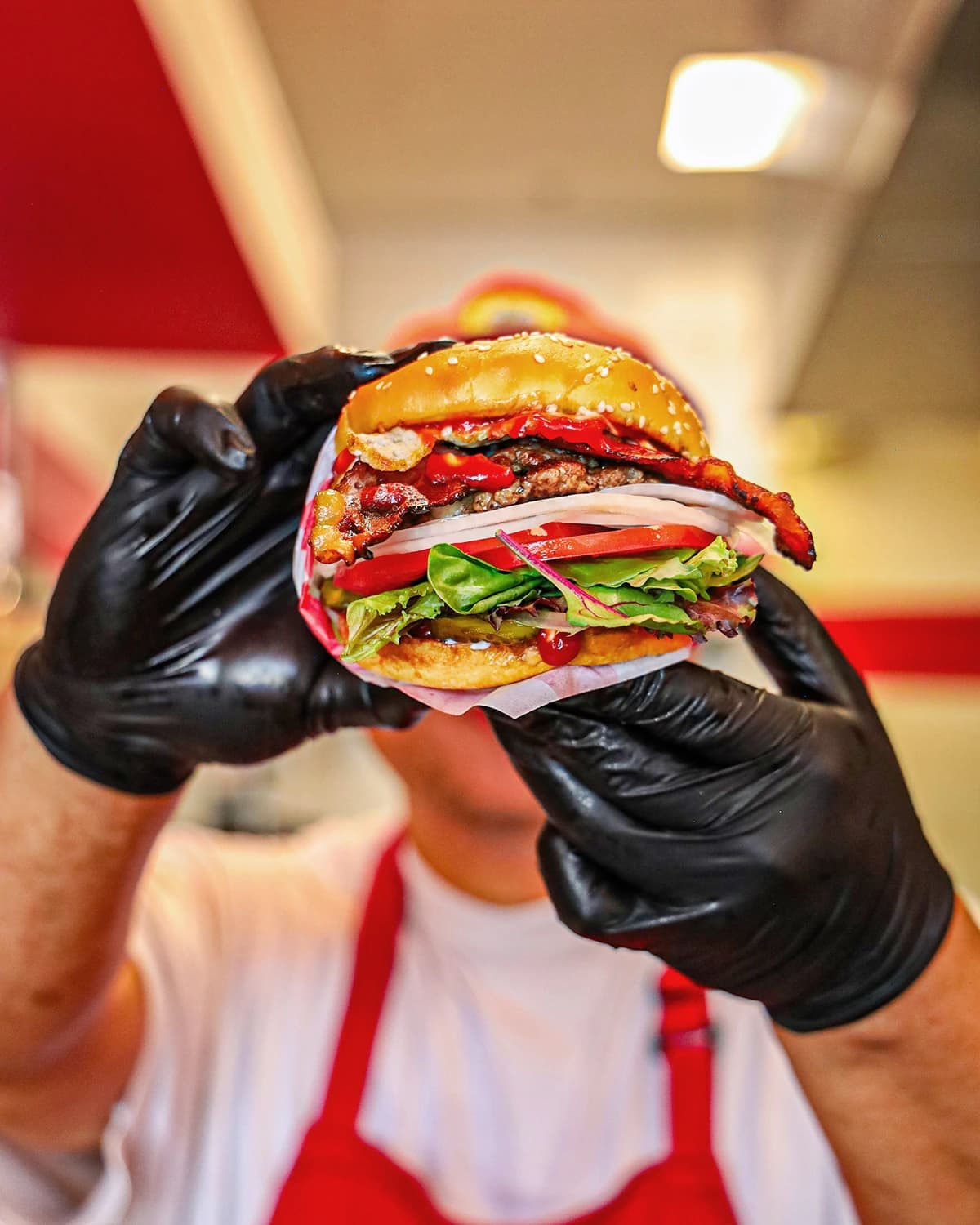
We spend our whole lives sweating and toiling for ourselves, crying and laughing, only to eventually fade away as time passes. These visually stunning, mouth-watering foods stand by our sides, yet they also become lethal weapons. In this sense, to me, appetite carries a meaning far beyond that of a mere visual object.
Appetite—a human instinct that often contradicts my personal religious views—falls under the category of primal desire, only deepening our human frailty. Our "decision paralysis" when faced with an overwhelming abundance of desserts is a completely natural phenomenon born from our excessive obsession with aesthetics.
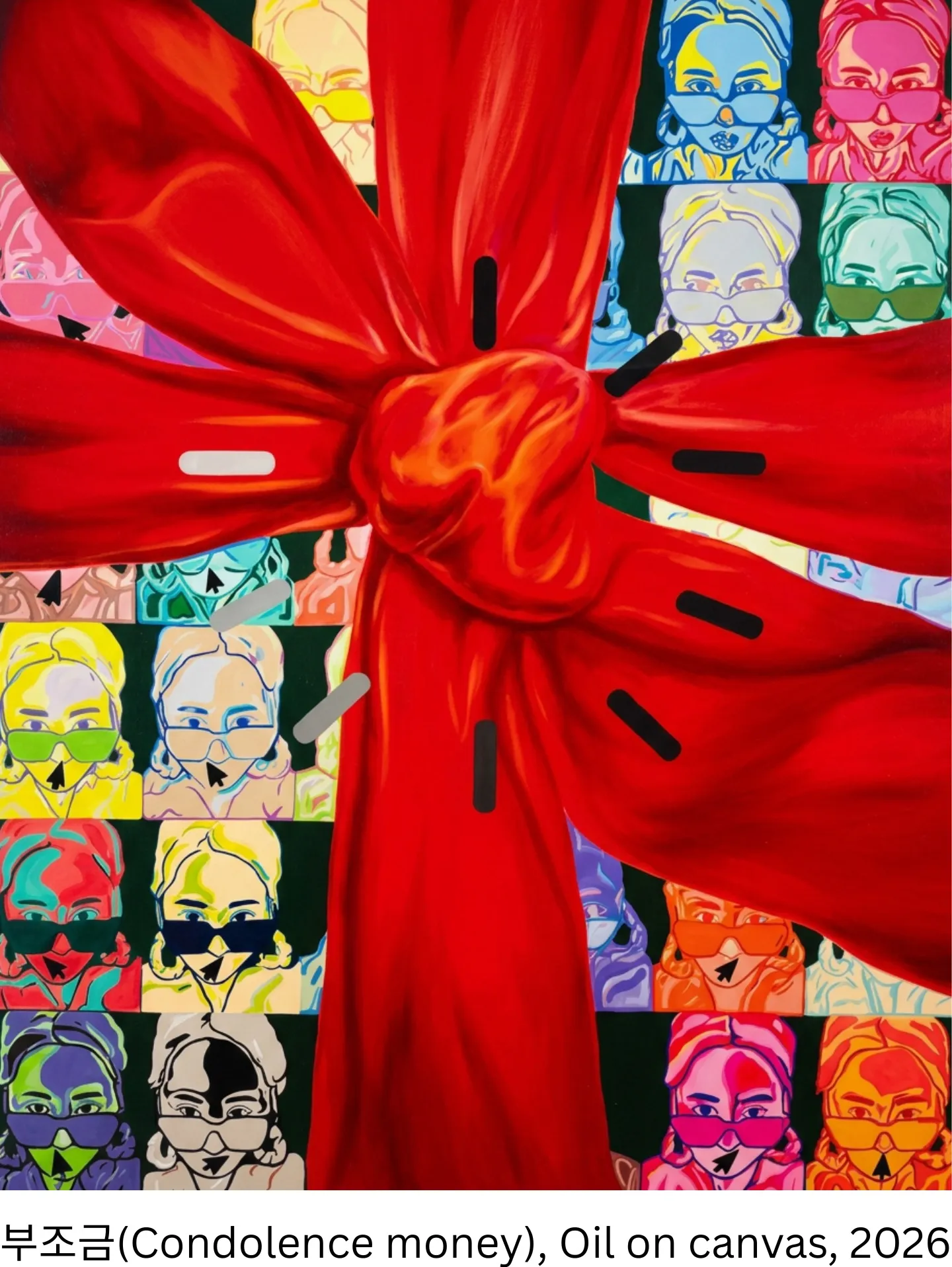
I expressed this exorbitant desire on the canvas by creating excessively inflated, overwhelmingly large images. The sticky texture of the oil paint and its physical properties represent the surplus calories that build up like useless, unproductive toxins in our bodies. Meanwhile, the heavily schematized representations within our digital screens reflect the noise inside our minds.
We destroy our health in the name of maintaining it. We consume to fill an inner void under the guise of "energy," only to accumulate toxins in our bodies. We take in what we know we should discard, turning a blind eye to the truth. God gifted humans with plants and fruits, granting us the free will to shape the world. Yet humans, having received all this, relentlessly produced "better" and "more convenient" things for themselves.
We replaced honey with artificial sweeteners; we commodified the sacred concept of sex—meant for growth and reproduction—into the sex industry; and we built concrete structures over the mountains and fields meant for nature. In our pursuit of convenience, we dedicate our entire lives to creating a better world (or a better life). We build these convenient spaces, only to ultimately return to a handful of dust.
Our internal organs, housed in a body built over decades, eventually exhaust their functions. We lose power like a machine running out of fuel, and the soul—housed in a body we invested immense capital into—finally reaches the end of its life. Living in today's modern society where nothing is lacking, having experienced both the analog era and high technology, can I really call myself lucky?
In a world where we simply take what we lack and easily discard what we don't need, I feel the "poverty of abundance" every single day. In this life of uncertain length, I dig into the roots of my thoughts: What do I genuinely want to protect and cherish? At what point can I break this vicious cycle? I wonder how much more I must consume to be satisfied, and what state of being can truly be defined as a fulfilling life. And I wonder if the point I envision as "the end" will actually be the end.
— By Artist Sujin Lim
instagram: @suzy_niii
Photobook · 사진첩